A Strong Start for Tennessee’s Children
Nearly 60% of TN’s third-graders are below proficient in reading and math. That’s not just a statistic — it’s a signal that too many children start school already behind; and too many never catch up. A strong early learning foundation is crucial for children to succeed in school and life and to power Tennessee’s economy as adults.
Each year, TQEE’s state budget, legisltive and administrative priorities are guided by our Policy Blueprint — built on data, research, and input from communities across the state. The Blueprint encompasses, and our policy priorities reflect, three domains necessary to ensure children get the strong start they need: Child Care & Early Learning, Health & Mental, and Supported Families.
Child Care and Early Learning
Make Smart Steps Available for All Low-Income Working Families Who Choose It. Use Tennessee’s TANF reserves to remove the Smart Steps child care payment assistance waitlist.
Create the Smart Steps Plus Child Care Payment Assistance Program for Middle-Income Working Families. Expand Smart Steps to middle-income working families to mitigate the benefit cliff and to make child care affordable.
Reduce the Child Care Workforce Shortage Through Compensation Incentives. Support solutions for competitive compensation that help stabilize and grow the early educator workforce. Prioritize free care for the child care workforce and expand the WAGE$ program and retention incentives.
Pilot a Tri-Share Employer Incentive Child Care Program. Launch a Tri-Share pilot where the cost of child care is shared by employers, employees, and the state — a proven public-private partnership that helps businesses recruit and retain workers while making care more affordable for working families.
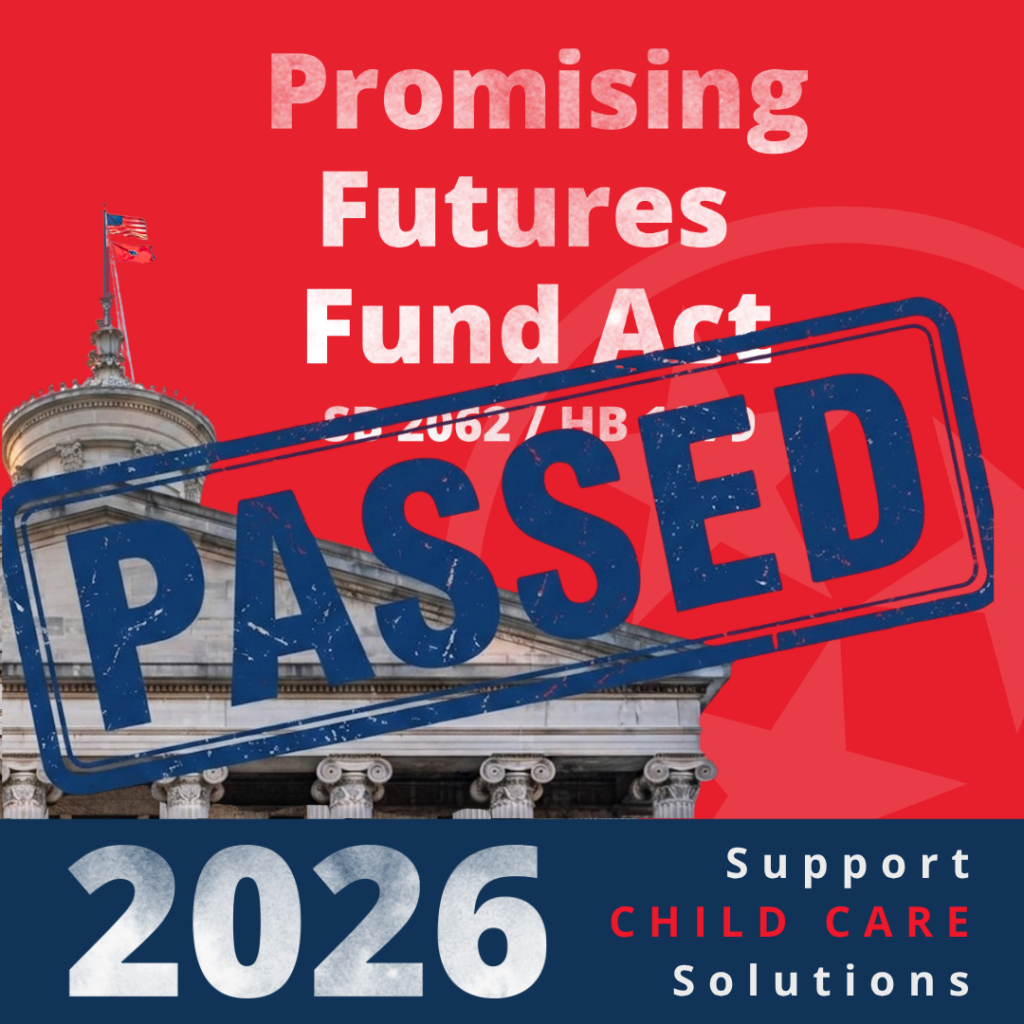
Create a New Dedicated Funding Stream for Child Care and Early Learning. Establish the Promising Futures Early Childhood Fund to expand access to high quality early care and education options for children prior to kindergarten. Priority uses will be to:
- Pilot child care scholarships for the child care workforce
- Pilot CareShare TN – a tri-share child care program in partnership with TN employers
- Implement a new Smart Steps Plus program – child care payment assistance for middle-income working families
Rightsize Child Care Regulations While Protecting Child Health and Safety. Mitigate regulatory burdens, including by removing liability concerns that prevent employers, faith-based organizations, and community partners from hosting licensed child care.
Strengthen Early Educator Career Pathways. Invest in innovative training pathways and work-based learning initiatives to grow the early educator workforce.
Establish Cost Modeling to Strengthen Program Quality. Conduct a cost-of-quality study and adopt a statewide cost model to guide child care reimbursement rates and provider contracts — ensuring public funds are used efficiently and tied to quality outcomes.
Address the TISA Undercount of Economically Disadvantaged Children. Ensure TISA allocations to LEAs fully account for the number of disadvantaged children by revising how the state identifies them.nded people.
Health and Mental Health
Prioritize Prenatal, Perinatal, Infant and Early Childhood and Maternal Health Services. Deploy additional resources, including TennCare and federal Rural Health Transformation Program funds, to evidence-based services– including programs such as group prenatal care, doulas, and voluntary home visiting services for young children and their families — to ensure children get the healthy start they need to thrive. Additionally, scale promising pilots have demonstrated effectiveness in mitigating social determinants of health.
Invest in team-based, integrated pediatric models such as HealthySteps that connect families with early development and parenting support, including behavioral health support, through their pediatrician’s office. Start with pilots in underserved areas, consider incorporating into Tennessee’s Rural Health Transformation Plan, and explore sustainable funding through TennCare.
Supported and Supportive Families
Implement Broad Based Categorical Eligibility (BBCE) for SNAP. Adjust SNAP eligibility to include households qualifying for non-cash TANF benefits– effectively increasing income eligibility from 130% FPL to 200% FPL. This policy, implemented in most states, would reward work by smoothing the benefits cliff, help ensure a more accurate count of children for the FRPL program, and draw down federal dollars more efficiently.
Promote Access to Paid Parental Leave. Build on the state’s paid parental leave program for public sector employees by establishing a parental leave insurance program that ensures parents working in the private sector also have the option for paid leave following the birth, adoption, or fostering of a child. Paid parental leave strengthens families, supports infant well-being, and helps employers retain a stable, reliable workforce. It also serves as a smart policy lever to ease pressure on Tennessee’s strained infant child care market — allowing parents to stay home during a child’s earliest months, when care is most expensive and scarce.
Note: As bills are filed, and a budget is presented by Governor Bill Lee, TQEE will publish a bills “hotlist” and additional priorities aligned to our Policy Blueprint.
For Questions: Contact Rebecca Woods | Rebecca@TQEE.org